By Frans Malete (Senior Associate)
30 April 2026
By Frans Malete (Senior Associate)
30 April 2026
INTRODUCTION
Partition transfers in South Africa are a specialised form of property transaction governed primarily by the Deeds Registries Act 47 of 1937. Partition of land takes place when two or more people (joint owners) who own in undivided shares the whole of any piece or pieces of land, have agreed to partition such land. This process is legally distinct from a conventional sale and has important procedural, financial, and legal implications.
WHAT IS A PARTITION TRANSFER?
A partition transfer is the legal process through which co-owned property is subdivided or otherwise allocated such that each co-owner receives a defined portion in place of their undivided share.
TWO FORMS
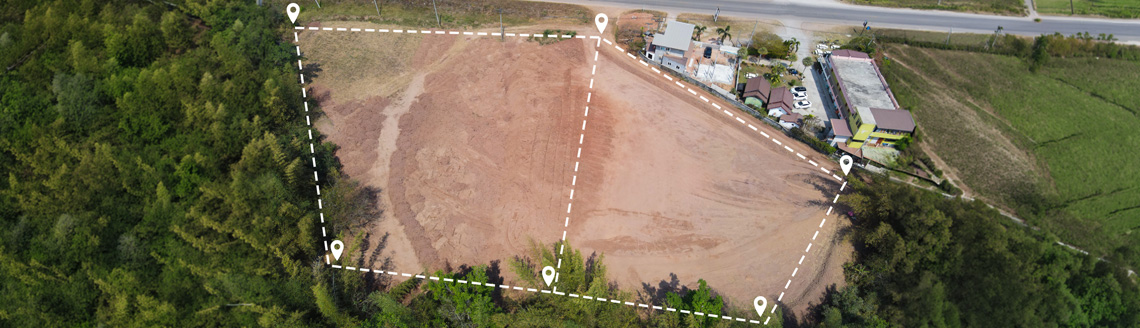
Partition of land can take two forms, depending on whether the joint owners own shares in the whole of a piece of land or shares in various pieces of land. When the joint owners own shares in the whole of a piece of land, the land must first be subdivided, in order to enable them to partition the land, meaning the subdivisional diagrams for the relevant portions must first be drafted by a land surveyor and approved by the Surveyor General.
When joint owners own shares in various pieces of land the land need not be subdivided, as it already consists of various pieces of land which makes partition easier and less costly.
LEGISLATION
Sections 26 to 30 of the Deeds Registries Act 47 of 1937 set out the procedure for the partitioning of land held under joint ownership.
The act stipulate that partitioning may be carried out by virtue of an agreement between the joint owners or by virtue of an order of court. Court orders are sought and can be obtained where the co-owners are unable to reach an agreement on the partitioning of land.
REQUIREMENTS
DOCUMENTS TO BE LODGED AT THE DEEDS OFFICE
MORTGAGE BONDS ON PARTITION
When there is a mortgage bond registered over the land to be partitioned, the mortgage bond must either be cancelled, replaced with a new bond or a portion of land awarded on partition must be substituted for the share. The mortgagee (Bondholder) must give written consent to the partition of land and the substitution of the land awarded on partition to the mortgagor for the share(s) mortgaged.
CONCLUSION
Partition transfers are an important part of South African property law, as they allow co-owners to divide property in a fair and orderly way. They are governed by the Deeds Registries Act 47 of 1937 and require proper planning, legal assistance, and compliance with relevant laws. When done correctly, they provide a practical way for co-owners to obtain separate ownership without needing to sell the property.