
By Nombuyiselo Mvelase (Associate), and
Maike Gohl (Partner)
14 May 2026
By Nombuyiselo Mvelase (Associate), and
Maike Gohl (Partner)
14 May 2026
INTRODUCTION
The issue of hijacked buildings is an increasingly common and complex problem in many of South Africa’s inner-city areas. It raises difficult legal questions, particularly where property owners have lost control of their buildings but remain liable for municipal charges.
In this context, municipalities are often required to balance two competing considerations:
The difficulty arises where these interests conflict. In particular, municipalities such as the City of Ekurhuleni Metropolitan Municipality (“EMM”) often take the position that services cannot be disconnected where there are still people living on the property, as doing so may infringe on their constitutional rights. This position, however, has significant consequences for property owners, who may be left responsible for substantial municipal accounts without receiving any benefit from the property.
This article considers the legal framework underpinning this position, with reference to the EMM’s by-laws and constitutional obligations. It further examines the extent to which the burden placed on property owners in these circumstances is legally sustainable, particularly where those owners have no control over the property or its occupants.
WHAT ARE HIJACKED BUILDINGS?
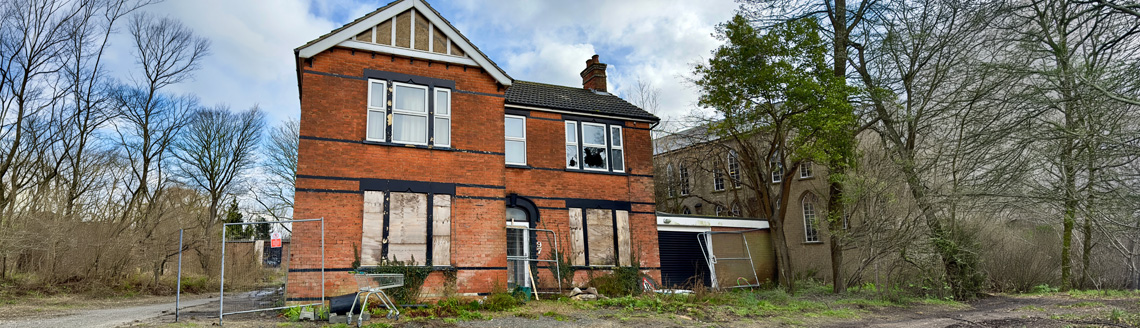
Hijacked buildings generally refer to abandoned, vacant, or poorly managed properties (sometimes the owner can also just be unlucky and be the target of a sustained takeover), often located in inner-city areas, which have been unlawfully taken over by criminal syndicates.
In many instances, these syndicates take control of the building and rent out individual units to occupants without any lawful authority to do so. Occupants are often not provided with valid lease agreements and may be unaware that they are not dealing with the lawful owner of the property.
For purposes of this article, these individuals are referred to as “unlawful occupiers”, being persons who occupy the property without the consent of the owner or any other legal right to do so, often without knowledge of the unlawful nature of their occupation.
LEGISLATIVE BACKGROUND: OBLIGATIONS OF PROPERTY OWNERS
This situation places occupants in a vulnerable position, as they are often paying rent in good faith to individuals who have no legal right to the property. At the same time, it places an equally significant burden on property owners.
In most cases, the registered owner continues to receive municipal accounts for services such as water, electricity and sewer, despite having lost control of the building and receiving no rental income. These accounts often escalate to substantial amounts over time, while the owner attempts to get back control of the building.
When property owners attempt to have services disconnected, municipalities often refuse. This is typically on the basis that disconnection would negatively affect the occupants, who rely on those services for basic living conditions. Municipalities therefore regard such disconnections as potentially infringing on the occupants’ constitutional rights.
This raises an important legal question: how should the rights of unlawful occupants be balanced against those of the property owner?
EMM’S POSITION
One of the core objectives of local government is to ensure the provision of basic services to communities in a sustainable manner.
This obligation is reflected in the constitution, legislation and the municipal by-laws. For the sake of brevity, we will only deal with EMM’s By-Laws herein.
In terms of the EMM’s Public Health By-Laws¹:
Based on these provisions, the municipality’s position is typically that a property owner cannot request the disconnection of water services where the property is still occupied.
This is because doing so could create a public health risk and interfere with the occupants’ access to basic services.
EMM’S APPROACH IN PRACTICE
In a matter we recently dealt with, where a property owner was in the process of evicting the unlawful occupiers and had in the interim requested EMM to disconnect the services, the position adopted by EMM provides a useful illustration of how these principles are applied in practice.
In relation to the electricity charges, the primary issue raised by the EMM was the repeated unlawful reconnection of electricity supply at the property. On this basis, the EMM maintained that the property owner was liable for the tampering fines imposed on the account.
A further position adopted by EMM was that an owner–tenant relationship existed between the property owner and the unlawful occupiers. This was so despite the fact that:
This approach effectively treats unlawful occupiers as if they are lawful tenants of the property owner, thereby placing responsibility for their consumption of services on the owner.
THE LEGAL POSITION: WHO SHOULD BEAR THE OBLIGATION?
In contrast to the above, it is important to consider the legal position more carefully.
There is no clear constitutional or statutory provision that places a direct obligation on a private property owner to pay for municipal services consumed by unlawful occupiers. In other words, there is no law that expressly requires an owner to carry this financial burden in circumstances where they have lost control of the property.
If unlawful occupiers are entitled to access basic services such as water and electricity as part of their constitutional rights, then the obligation to provide those services rests with the municipality. It arises from the municipality’s public law duty to provide services to communities.
Importantly, the fact that a municipality may be under pressure, or may lack the resources to fully meet these obligations, does not provide a legal basis for shifting that responsibility onto a private property owner.
Where a property owner seeks the termination of services, the consequence may well be that the unlawful occupiers are required to look to the municipality for the continued supply of those services. However, this is a consequence of the municipality’s constitutional obligations, and not a basis for imposing liability on the property owner.
THE CENTRAL TENSION
What emerges from the above is a clear tension between:
It is within this tension that disputes between property owners and municipalities arise, and where the differing positions of municipalities, such as the EMM, become particularly significant.
A CRITICAL ASSESSMENT OF EMM’S APPROACH
EMM’s approach effectively imposes strict liability on property owners, despite the fact that neither legislation nor case law expressly provides for this.
This position must be considered in light of the Constitutional Court’s judgment in Joseph and Others v City of Johannesburg and Others², where it was confirmed that municipalities bear the primary responsibility for the provision of basic services. The Court emphasised that this obligation exists irrespective of whether there is a contractual relationship between the municipality and the individuals receiving those services.
In simple terms, access to basic services such as electricity is not dependent on a contract – it arises from the municipality’s public law duties.
A similar principle was reaffirmed by the Supreme Court of Appeal in Emalahleni Local Municipality v Lehlaka Property Development (Pty) Ltd³, where it was made clear that a municipality alone bears its administrative law obligations toward residents. These obligations cannot be transferred to a third party unless there is a clear contractual arrangement in place.
This is significant in the context of hijacked buildings. There is no contractual relationship between the property owner and the unlawful occupiers. The owner does not know who occupies the building, does not receive rental income, and has no control over the consumption of services. As such, there is no private law relationship between the owner of the property and the unlawful occupiers.
Despite this, the EMM’s approach seeks to do precisely what the courts have cautioned against. On the one hand, the municipality continues to supply services to the property in fulfilment of its constitutional obligations. On the other hand, it seeks to hold the property owner financially responsible for those services, even where the owner has taken steps to request that such services be terminated.
Put differently, the municipality seeks to comply with its constitutional obligations, while at the same time shifting the financial burden of those obligations onto the property owner.
This may create a fundamental imbalance. The property owner is expected to bear the cost of services over which they have no control, for the benefit of individuals with whom they have no legal relationship.
CONCLUSION
The approach adopted by EMM raises important questions of legality, rationality, and fairness. While municipalities are undoubtedly required to provide access to basic services, the extent to which they can shift the financial burden of those obligations onto property owners, particularly in circumstances where those owners have no control over the property, and have requested the disconnection of the services to the property in an attempt to mitigate their damages, remains questionable.
In practice, this approach leaves property owners exposed to escalating municipal debt for services they neither consume nor benefit from, and over which they have no meaningful control. This creates a significant imbalance between responsibility and liability.
Whether this position can withstand legal scrutiny remains an open question. However, what is clear is that, in the absence of a clear legal framework addressing hijacked buildings, disputes of this nature are likely to persist.
Please note: this article is for general public information and use. It is not to be considered or construed as legal advice. Each matter must be dealt with on a case-by-case basis and you should consult an attorney before taking any action contemplated herein.
¹Ekurhuleni Metropolitan Municipality, Public Health By-laws, published under General Notice in the Gauteng Provincial Gazette, 27 November 2009.
²Joseph and Others v City of Johannesburg and Others [2009] ZACC 30; 2010 (3) BCLR 212 (CC); 2010 (4) SA 55.
³Emalahleni Local Municipality v Lehlaka Property Development (Pty) Ltd (600/2022) [2023] ZASCA 138; [2024] 1 All SA 1 (SCA) (25 October 2023).

