Gxaka-Gxaka Locality and Others v Municipal Manager, Mbashe Local Municipality and Another
By Thiavna Subroyen-Govender (Associate), and
Makabongwe Ndwandwe (Candidate Attorney)
23 October 2026
INTRODUCTION
South African communities frequently experience inadequate municipal service delivery, including interruptions to water services and failures to maintain infrastructure and roads. Against this background, members of the Gxaka-Gxaka locality (‘’the Community’’) approached the High Court of South Africa, Eastern Cape Division, Mthatha (“the High Court”), seeking relief against the Mbhashe Local Municipality (‘’the Municipality’’) and its municipal manager. This article discusses the recent case of Gxaka-Gxaka Locality and Others v Municipal Manager, Mbhashe Local Municipality and Another.1
BACKGROUND OF THE CASE
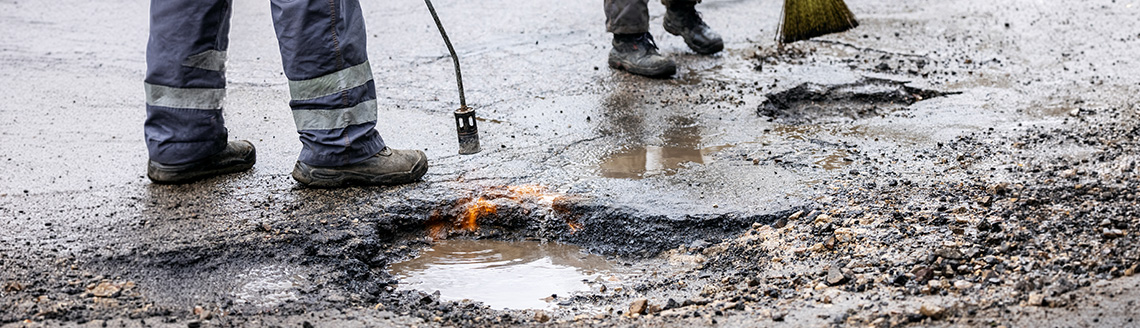
The community members of Gxaka-Gxaka approached the High Court seeking an order compelling the “the Municipality” to fix, repair and resurface the dilapidated Gxaka-Gxaka access road. This followed numerous complaints by the Community to municipal councillors requesting the repair of the pothole-riddled Gxaka-Gxaka road. The complaints were unsuccessful, which prompted the Community to bring an application against the Municipality in the High Court.
The Community alleged that, under the Local Government: Municipal Systems Act 32 of 2000 (“the Municipal Systems Act”), the Municipality was obliged to grant the Community equitable access to municipal services. The Community further contended that the Municipality had a duty to respect the constitutional rights of citizens. It asserted that the Municipality had failed to fulfil its legal and constitutional service delivery obligations and that the Municipality had failed to take reasonable steps to maintain its infrastructure within its jurisdiction.
The Municipality denied that the Gxaka-Gxaba road was in a destituted state and asserted that the road had last been maintained in 2024 and is in no way dilapidated.
The High Court had to determine whether:
- the road had been dilapidated in such a manner that it needs to be restored and fixed;
- if the Municipality breached its constitutional duty to provide adequate service delivery to the Community; and
- if the High Court has the power to grant just and equitable relief in terms of section 172 of the Constitution of the Republic of South Africa, 1996 (“the Constitution”).2
THE HIGH COURT DECISION
The High Court held that section 153(a) of the Constitution imposes a duty on a municipality to structure and manage its administration, budgeting and planning processes so as to prioritise the basic needs of the community. It also obliges a municipality to promote the social and economic development of the community.3 Those basic needs include a well-maintained road.
The Acting Justice Mhambi stated in their judgment that the Municipal Systems Act defined ‘basic municipal services’ as “municipal service that is necessary to ensure an acceptable and reasonable quality of life and, if not provided, would endanger public health or safety or the environment”.4 The High Court further stated that communities depend on municipalities in delivering services and basic needs to ensure good quality of life and human wellbeing. It was further noted by the High Court that the Municipality did not complain about any constraints affecting its ability to repair the road.
In determining whether the road required repair and restoration, the High Court found that the Community had established its case in that the road was found to be in a dilapidated condition.
The High Court found that, by failing to provide the Community with a better, well-surfaced and maintained access road, the Municipality had breached its constitutional obligation.5 As an organ of state, the Municipality ought to set an example by complying with the Constitution and acting as a good constitutional citizen.6 The Municipality’s failure to provide the basic municipal service of a better and properly maintained access road therefore constituted both a breach of its constitutional obligation and a failure to act as an exemplary constitutional citizen.
The Applicants also requested the High Court to grant just and equitable relief on the basis of section 172 of the Constitution.7 In that regard, the High Court held that courts have a duty to grant an appropriate and effective remedy. This is particularly important when people who lack the means to enforce their rights may approach a court for assistance. In such matters, the court must ensure that those rights are effectively vindicated.8
Accordingly, the High Court held that the application should succeed and ordered the Municipality to attend to the repair the Gxaka-Gxaka road into a workable state.
CONCLUSION
This judgment serves as a reminder of the service-delivery obligations that local municipalities owe to their communities. A municipality’s failure to deliver basic services may constitute a breach of its constitutional obligations. In this case, the Gxaka-Gxaka community experienced such a failure because the Mbhashe Local Municipality did not provide a properly maintained access road, leaving it pothole-riddled and dilapidated.
1 (1673/2025) [2026] ZAECMHC 36.
2 Ibid para 13.
3 Ibid para 15.
4 Ibid para 16.
5 Ibid para 29.
6 Ibid para 30.
7 Ibid para 39.
8 Ibid para 40.