By Brett Viedge (Candidate Attorney),
and Matthew Ainsworth (Senior Associate)
01 December 2025
By Brett Viedge (Candidate Attorney),
and Matthew Ainsworth (Senior Associate)
01 December 2025
INTRODUCTION
Due to the prevalence of drownings in South Africa, property owners have a legal responsibility to control access to a swimming pool situated on their property.
Property owners are often uncertain as to what is actually required by them, particularly with regards to fencing and controlling access.
WHAT THE LAW REQUIRES
Under SANS 10400-D, a pool must be secured by a wall or fence that prevents access from any street or public area. The wall or fence must also include a self-closing, self-latching gate.
The wall or fence must be a minimum height of 1.2 metres, and if a fence is used, the vertical bars may not allow a 100mm in diameter ball to pass through.
THE COMMON MISCONCEPTION
The above is especially relevant for sectional title units or estates, however, confusion usually arises when a freestanding property has a swimming pool.
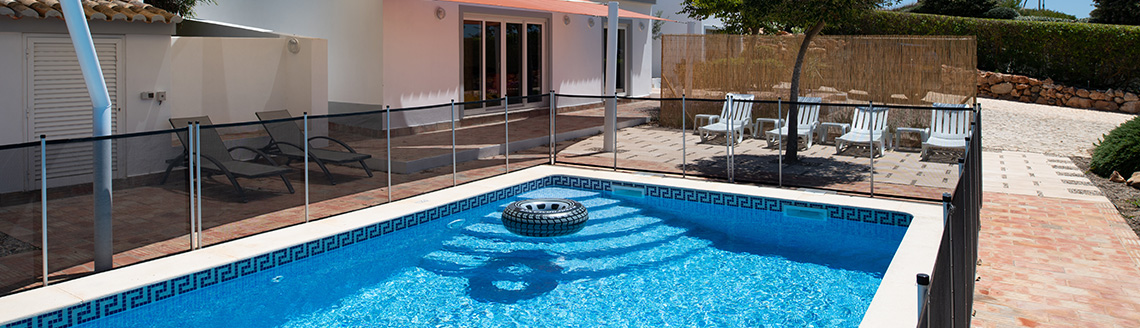
As can be seen by the below illustration, a fence surrounding a property containing a swimming pool, satisfies the above-mentioned requirements, without a separate fence around the pool being needed.
As can also be seen, a building or structure may also be used in part as a fence or wall, so long as the pool is enclosed within the property and is not easily accessible to the public.

CONCLUSION
Therefore, depending on where the swimming pool is located, it is not always necessary for a swimming pool to have a separate fence surrounding it.